
The short answer
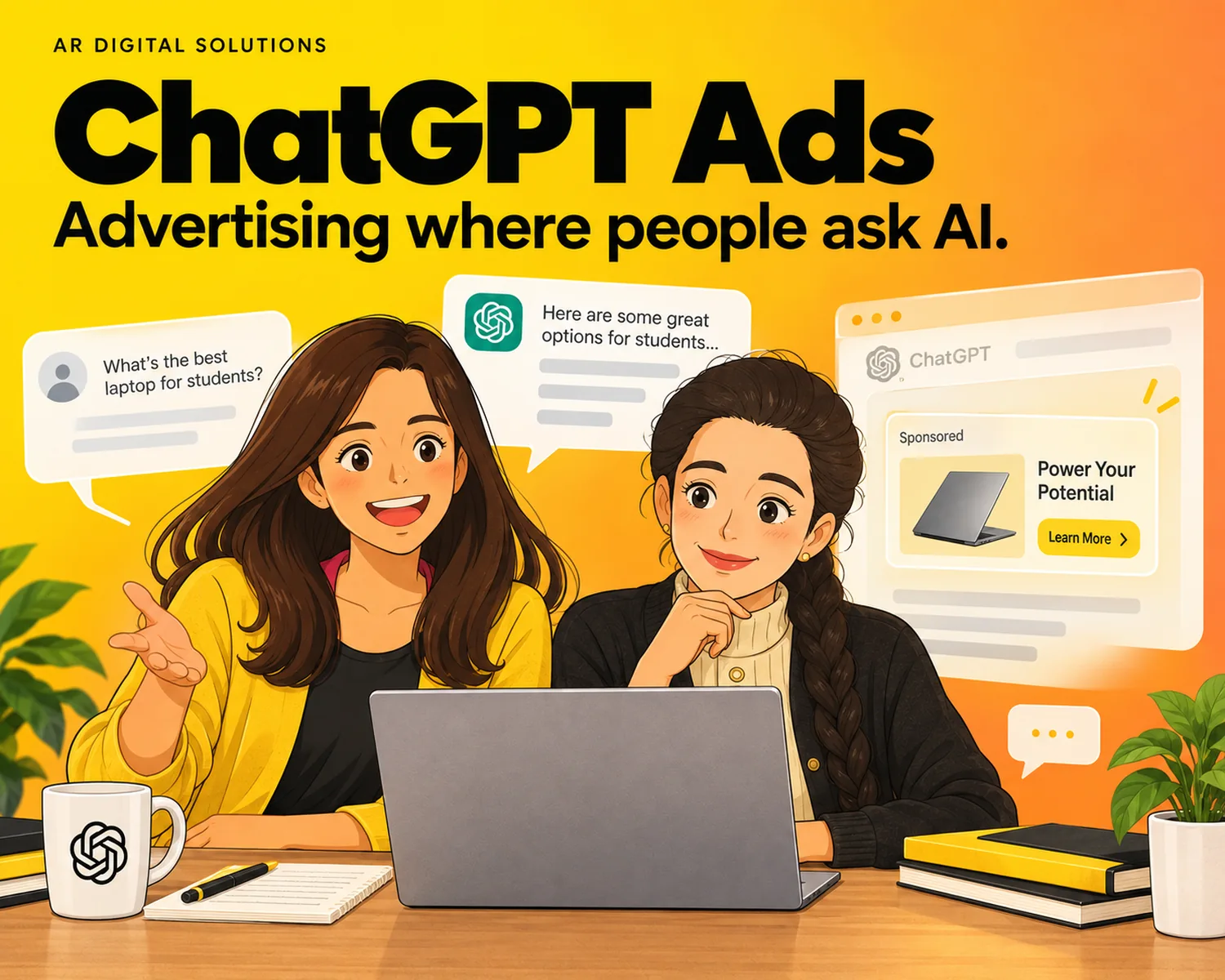
ChatGPT ads are paid placements shown inside AI assistant answers rather than on a results page. The formats are early and the reporting is thin, so we treat them as a funded test with a fixed budget, a defined question and an agreed point at which we stop. The reliable play today is still earning organic citations.
How we handle a new channel
- A written test plan: the budget, the window, and the one question it answers
- Baseline numbers captured before launch, so there's something to compare against
- Copy written for a buyer who has already done their research
- Tracking built to catch the traffic AI referrals hide, including direct and branded search
- A parallel push at organic citations, where most of the value sits
- A stop criterion agreed in advance and honoured
What advertising inside an AI assistant actually changes
Start with what disappears. There's no keyword list to build, no match types to argue about, and no position one to buy. A results page shows ten links and an auction decides the order. An assistant gives one answer, and the ad sits beside it rather than above nine competitors.
The unit is a conversation, not a query.
Someone types "best way to finance a second hand truck", narrows it, asks about balloon payments, then asks who does this in Brisbane. By the time a commercial placement makes sense, the assistant is holding context you never got in a search box: the budget, the constraint, the objection. That's not a keyword, it's a brief.
The buyer arrives further along.
The comparison work your landing page used to do has already happened inside the chat. That cuts both ways. The person who reaches you is warmer and better informed, and there are far fewer of them. Expect a higher cost per interaction, and expect your ad to answer the last question rather than the first.
Last click will undercount it badly.
The assistant does the considering, then the person opens a new tab and types your business name, or goes to your site from memory a day later. Attribution hands the credit to branded search or direct, the two channels that always look free. Judge this on last click conversions and you'll switch it off while it's working, which is the mistake plenty of businesses made with early Facebook.
So we instrument it differently. Branded search and direct sessions get a baseline before launch, and the enquiry form asks how people heard about you.
How to test a channel nobody has mastered.
Set a budget you can afford to lose entirely, taken from your growth allowance rather than the campaign paying your wages. Fix the window first, usually eight to twelve weeks, because a fortnight tells you nothing and a year of drift is how budgets get wasted quietly. Write down the question you're answering, and agree the number that means stop while everyone is calm.
Being cited is the more reliable play right now.
Ad inventory inside AI assistants is early and the rules will change. Being named in the answer itself is available today, isn't bid on, and doesn't stop when the budget does. That work is generative AI SEO, and for most businesses it deserves the first dollar.
Where we stand.
This is early. We'll measure it honestly, show you the working, and tell you to stop if it isn't earning its place rather than roll the budget quietly into next month.
How a test runs
We work out whether you should bother
Some categories are already being answered by assistants. Others aren't. We'll say which you're in.
We set the budget and the question
A number you can lose, a fixed window, and one thing you're trying to learn.
We take the baseline and launch
Branded search, direct traffic and total enquiries recorded first, then it goes live.
We report and decide
Fortnightly readouts, then a call at the end: scale, keep testing, or stop.
Who this suits, and who it doesn't
It suits businesses already earning from search or social, with margin to fund an experiment and patience to judge it on total enquiries.
It's a poor fit if this would be your first paid channel, or if the test budget is your only budget. The channels on the paid search pillar will do more for the same money.
Why clients let us run the experiment
We'll tell you to stop.
Half of managing a new channel is knowing when it isn't working and saying so, with the numbers on screen.
No lock in contracts*.
Month to month, so an experiment that fails costs you the test budget and nothing else.
One team across the whole picture.
The people running this test also run your search and your broader marketing, so nobody argues about who gets credit for a lift in branded search.
"Isn't everyone claiming to be an expert in this?"
Yes, and none of them are. The formats are months old and the reporting is incomplete. Anyone selling you a proven AI ads methodology is describing something that doesn't exist yet.