
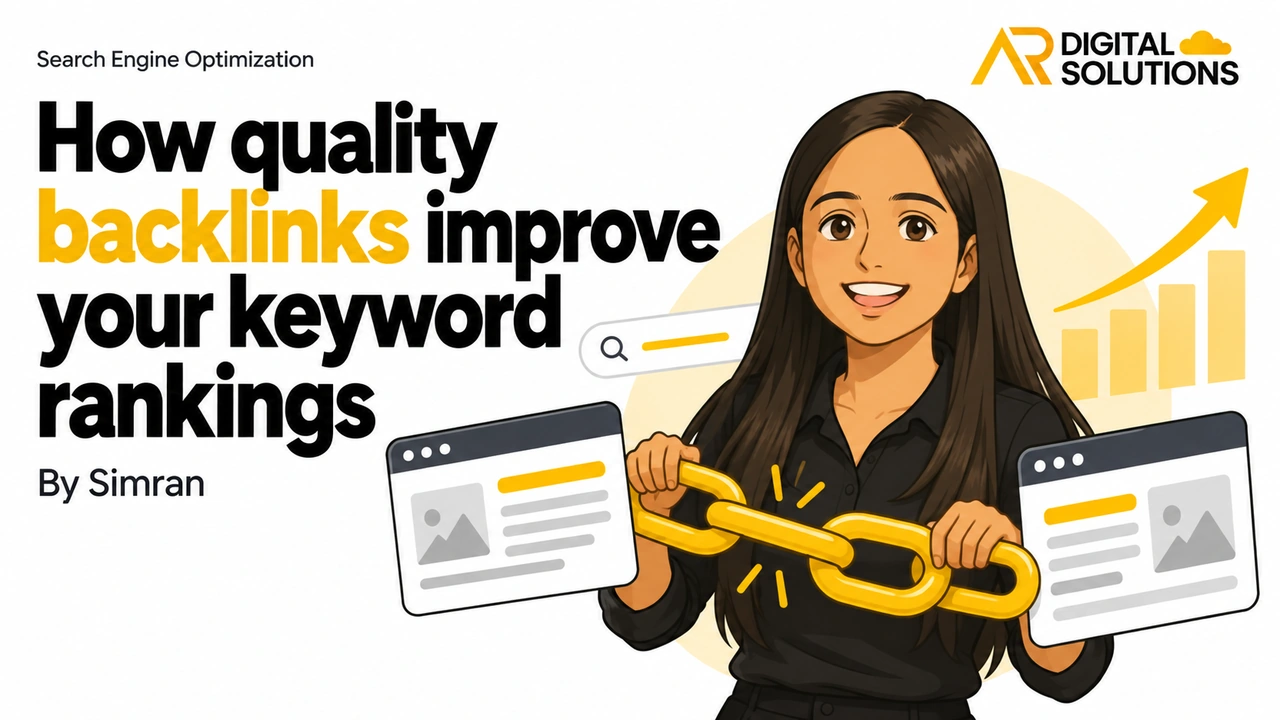
Backlinks, links from other websites pointing to yours, remain one of the most significant ranking factors in Google's algorithm. Google treats them as votes of confidence: when a credible website links to your page, it signals that your content is worth referencing. The more credible the source, the stronger the signal. Earning those links is one part of the SEO services in Brisbane we run.
But the emphasis on quality has never been more important. Low-quality backlinks do nothing at best and cause penalties at worst. This article covers what makes a backlink genuinely valuable, what a healthy link profile looks like, and how to build one sustainably.
Why backlinks matter for keyword rankings
When Google evaluates where to position your page in search results, it considers hundreds of factors. Backlinks sit near the top of that list because they are difficult to fake at scale. An editorial link from a respected industry website is a genuine endorsement of your content, which is harder to manufacture than on-page optimisation.
A site with strong backlinks tends to rank higher across all its pages, not just the ones the links point to. This cumulative effect on domain authority is why link building is a long-term investment. The effort you put in today continues paying returns for months or years.
What makes a backlink high quality
Not all links are equal. The value of a backlink depends on several factors:
The authority of the linking site. A link from a national news publication or a well-established industry body carries far more weight than a link from a newly created directory site. Tools like Ahrefs and Moz assign domain authority scores that can help you evaluate potential link sources.
Topical relevance. A link to a Brisbane web design agency from a digital marketing blog is more valuable than a link from a home renovation website. Google gives more weight to links that come from sites covering related topics.
Anchor text. The clickable text of the link gives Google context about the destination page. Natural anchor text includes a mix of branded terms, partial match keywords, and generic phrases like "read more." An unnatural concentration of exact-match keywords in anchor text looks manipulative and can trigger penalties.
Placement in content. Links embedded within the body of an article carry more weight than links in a footer or sidebar. Editorially placed links, those chosen by the author because the destination genuinely adds value, are the most trusted.
No-follow versus do-follow. Do-follow links pass authority from one site to another. No-follow links carry a tag that tells Google not to pass authority. A healthy backlink profile includes both types. A profile composed entirely of do-follow links from low-quality sources is a red flag.
What a natural link profile looks like
Google's algorithms are designed to detect unnatural patterns. A sudden spike of hundreds of links from unrelated sites, all using the same anchor text, is a clear signal that link building has been artificially accelerated.
A natural profile grows steadily over time. It includes links from:
- Industry directories and professional associations
- Local business directories
- Media coverage and editorial mentions
- Guest articles on relevant publications
- Partner websites and complementary service providers
- Genuinely useful content that others choose to reference
The anchor text should vary naturally. Links should come from a range of domains with different authority levels, rather than all arriving from the same handful of sites.
Profile creation and directory listings
Getting your business listed on authoritative platforms is one of the more straightforward starting points for building a link profile. Platforms like LinkedIn, Google Business Profile, industry-specific directories, and local chamber of commerce websites provide citations that also function as links.
Consistent business name, address, and phone number information across these profiles strengthens your local SEO signals in addition to building links. Inconsistent or incomplete listings dilute the benefit.
Building links through content
Content that provides genuine value attracts links naturally over time. Research-backed articles, industry guides, original data, and practical how-to content give other websites a reason to reference you. This approach is slower than other link-building tactics but produces the most durable results, as editorially earned links are the ones Google trusts most.
Publishing content designed to attract links, sometimes called linkable assets, is a standard part of a long-term SEO strategy. A comprehensive guide to a topic in your field, positioned correctly, can earn links and traffic for years with no additional effort beyond the initial investment.
What to avoid
Buying backlinks from link vendors, participating in private blog networks, or using automated tools to generate links all violate Google's webmaster guidelines. When detected, these practices result in manual or algorithmic penalties that can take months to recover from and require significant remediation work.
The risk is not worth it when the alternative, building links through legitimate means, produces results that hold up through algorithm updates rather than disappearing overnight.