
The short version
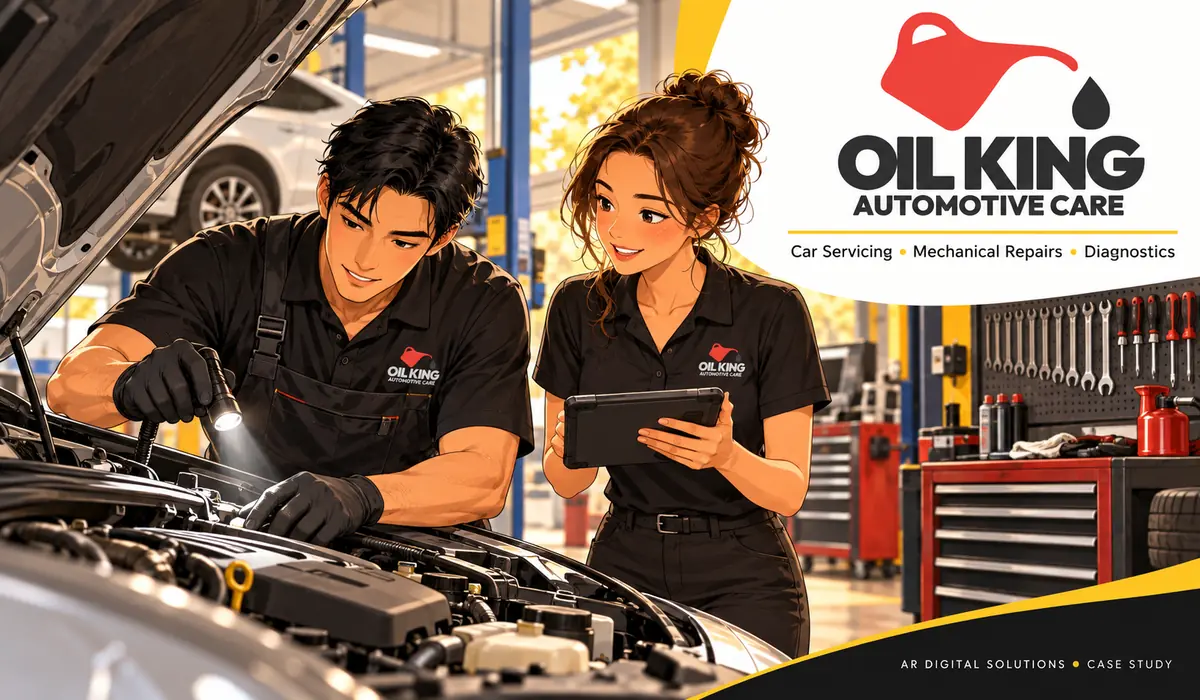
A mechanic workshop that opened with nothing online. Client reported online enquiries up 65% in the first three months, organic local traffic up 50% and leads up 40%.
What we did for Oil King Autos
- Website designDesigned and built in-house, structured for search from day one.
- Local SEO and Google Business ProfileMap pack visibility across the suburbs that matter.
- SEOTechnical fixes, content and links, reported by enquiries not rankings.
- Google AdsCampaigns built, tracked and optimised by our in-house team.
What we delivered
Rankings are one line on the report. For Oil King Autos the engagement covers website design, local SEO and Google Business profile, SEO and Google Ads. We designed and built the website, structured for search from the first wireframe rather than optimised after the fact. The SEO programme runs on top of that: technical fixes, content written for the searches that actually turn into enquiries, and links earned in the client's own market. Local search gets its own attention, with the Google Business Profile, reviews and suburb pages working together for the map pack. We also manage the Google Ads account, so paid and organic search are planned together instead of competing for the same clicks.
The result is a marketing setup the client can call one number about.
The short answer
Oil King Autos opened with no website, no rankings and no reviews. We built the site, set up and worked the Google Business Profile, and ran Google Ads and Meta Ads alongside the local SEO so the workshop had visibility while the organic side caught up. Client reported online enquiries up 65% in the first three months, organic traffic from local searches up 50% and leads up 40%.
A new workshop is the hardest start in local business
You can buy the hoists, the diagnostic gear and the sign out the front. You cannot buy the thing customers are actually choosing on, which is whether someone else has already trusted you with their car.
Trust is the product in this trade. People hand over the second most expensive thing they own to a stranger who then tells them what's wrong with it and what that costs. So they check. Reviews, how many, what the last one said, whether the place looks like it has been there a while. A new business fails every one of those checks at once.
Meanwhile the rent starts immediately. You need bookings this month, and the channel that builds trust properly takes longer than that.
A site that answers the questions people ring up and ask
The site listed services separately, because logbook servicing, brakes, air conditioning and pre purchase inspections are different searches and different buyers. Booking was obvious on a phone, since almost all of this traffic arrives on mobile. Address, hours and map sat where they could be seen without scrolling. Photos came from the actual bay rather than a stock library.
We kept the pages short. Nobody choosing where to book a service reads 1,500 words. They want to know you work on their car, roughly what it costs, and how to book.
The Google Business Profile does more work than the website
For a mechanic, the map pack is the whole game. Most searches are "mechanic near me" or "car service" plus a suburb, and the results people tap are the listings with a map next to them.
So the profile came first. Correct category, service list, hours, real photos, service area, and the same name, address and phone number used everywhere else the business appeared. Then reviews, deliberately, from the first customers through the door. Not bought and not incentivised, just asked for at the point where the customer was happiest, which is when they collect the car and the bill matched the quote.
Why the ads ran at the same time, not afterwards
Local SEO for a new business takes months. Ads take hours. Running one without the other wastes the strength of both.
Google Ads bought the top of the page for high intent searches from day one, so the workshop was visible while the organic rankings were still forming. Meta Ads did a different job, introducing a new business to the suburbs around it where nobody is searching yet but plenty of people drive past.
The useful part is what the ads told us. The search terms report shows the exact language people use when they want a mechanic, and that fed straight back into the service pages and the profile. You're paying for the clicks either way, so take the data.
Mid page note.
If you're opening soon and want to know what to do first, that conversation takes twenty minutes.
The results
In the first three months, the client reported online enquiries up 65%, organic traffic from local searches up 50% and leads up 40%. Those figures come from the client's own analytics and booking records, not from an audit by us.
Worth being clear about the base. This was a business starting from close to zero, so the growth was always going to look steep. The result that matters is that a workshop with no reputation was getting found and booked inside a quarter.
A note on results
Results vary from client to client. They depend on the package chosen and the marketing budget the client puts behind the project, so what you see here reflects that client's spend, not a fixed outcome. Talk to us about a budget that fits your goals.
The order to do things in when you're opening with nothing
Sequence matters more than budget here. This is the order we use.
- Google Business Profile, before the website is finished. It can rank on its own, it takes days to set up properly, and it starts collecting reviews immediately. Waiting for the site to launch wastes a month.
- Reviews from your first ten customers. Ask every one of them in person when they collect the car. Ten honest reviews in your first month beats anything you could buy with the same effort.
- Paid search while organic catches up. Start small, only on searches that mean work, and turn it down later when the rankings hold.
- The website, built around the searches people actually make. One page per service, phone number visible, booking in two taps.
- Keep the details identical everywhere. Name, address, phone, hours. Dull, and it decides your map pack position.
More on the pieces: website design, local SEO, Google Ads and marketing for auto mechanics.