
The short answer
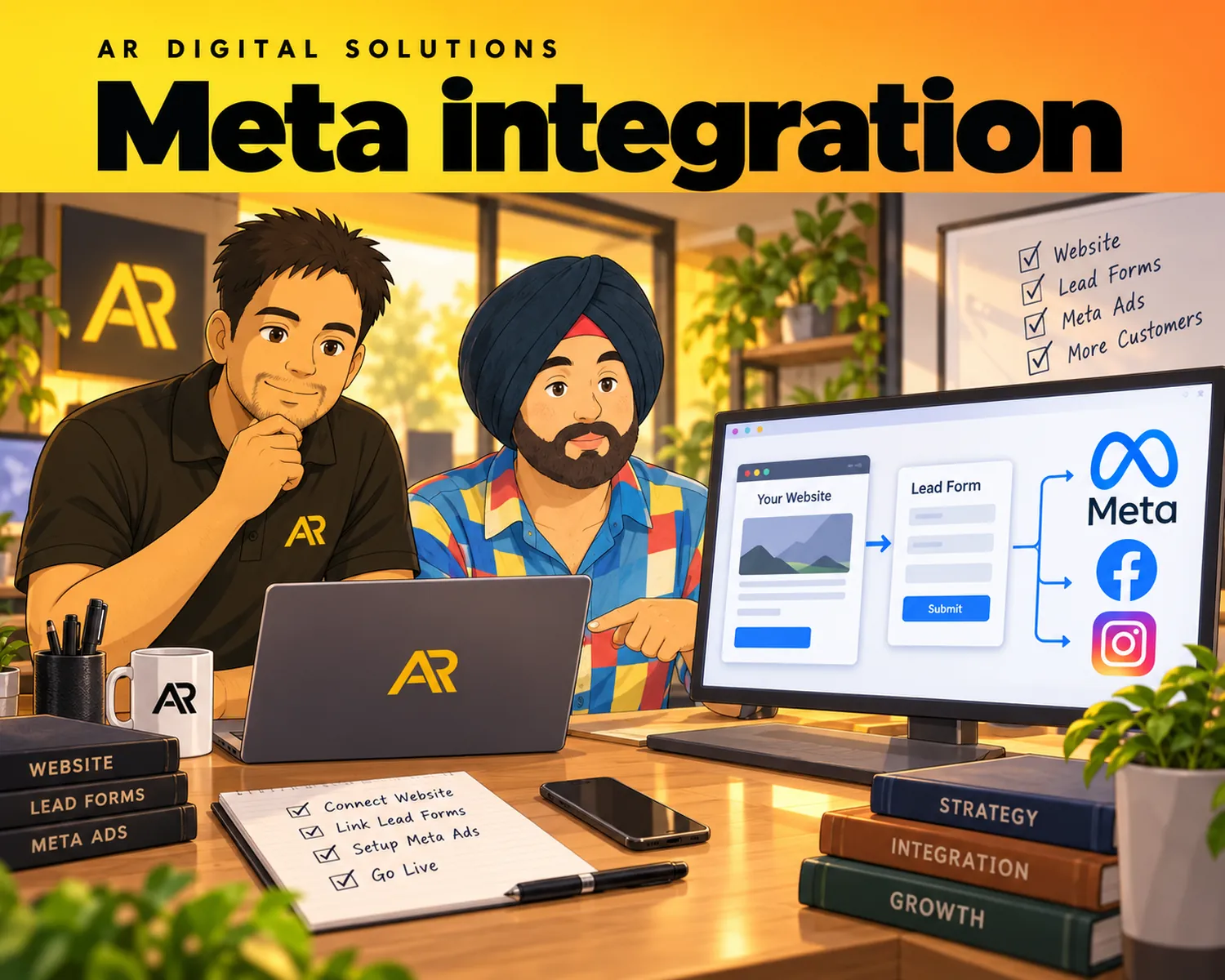
Meta integration connects Facebook and Instagram advertising to your own systems: the Conversions API sending events from your server, lead ad forms delivered into your CRM, catalogue feeds for dynamic ads, and offline sales uploaded back to Meta. We're a Meta Business Partner.
What the work covers
- Conversions API server side, with deduplication tested rather than assumed.
- Match quality work: hashed email, phone, name, postcode and click ID.
- Lead ad forms into your CRM through the webhook, mapped and deduplicated.
- Offline conversion uploads for sales closed on the phone.
- Catalogue feeds kept in step with stock and price.
- Custom audiences built from CRM segments, refreshed automatically.
What the Conversions API actually fixes, and what it doesn't
The pixel is a script in someone's browser, and browsers keep getting better at stopping scripts like it. Tracking prevention, ad blockers, extensions, declined consent. None of that is reversing.
Lost reporting is the smaller problem. Meta's bidding trains on the conversions it can see, so a partial view means it optimises against a biased sample. The Conversions API sends those events from your server instead, or from whichever system already holds the record: your store backend, or a deal marked won in your CRM.
Deduplication is where most set ups quietly break
Run both sources and the same purchase goes twice, so Meta collapses the pair using a matching event ID and event name. Generate that ID separately on each side, or leave it off the server event, and every purchase counts twice. That looks like a very good month until someone reconciles against invoices. It fails silently.
Match quality decides how much of the gap closes
A server event arrives with no browser context, so it carries identity itself: hashed email, phone, name, postcode, the click ID captured on arrival and stored against the record, the browser ID where a cookie exists. Meta scores how well it can match that to a person, and the score decides how much of the gap closes. Two parameters and seven parameters are different products. A checkout with an email and a mobile matches far better than a form with a first name.
The numbers will never reconcile exactly
Meta attributes back to the click inside its window. Your CRM records the day the money arrived. Some conversions are modelled, and one person on three devices is one customer to you. Chasing zero variance wastes a fortnight. Aim for a stable gap instead, because a platform sitting consistently above your records is still something you can budget with.
Lead ads are only as good as the minute after the submit
Lead forms convert because nothing has to be typed, which is also the weakness. The person barely paused, and by that evening may not remember the form. Downloading a CSV next morning throws away the format's only advantage. Through the webhook, that lead is assigned, texted and rung while the ad is still the last thing they looked at. Speed of contact beats new creative here.
How the build runs
Audit what's firing
Events, coverage and match quality as they stand.
Scope and price
Fixed number, dates in writing, and what moves first.
Build and verify
Both sources in parallel, deduplication confirmed in testing.
Watch it settle
Match quality and the gap against your records, documented.
Who this suits, and who it doesn't
It suits businesses spending enough on Meta that a distorted view costs money, stores with a backend record of every sale, and lead generation businesses running a CRM.
It isn't for an advertiser with nowhere to send the data, and it isn't a way around consent. Opt outs stay opted out, hashed or not.
Why build it with us
Meta Business Partner, ads team in the same office.
The people running Facebook Ads sit near the developers wiring the events, so what gets tracked matches what's being optimised for.
Developers, not a plugin install.
Server events, webhooks and retry logic are code. We write it, log it, hand it over.
No lock in contracts*.
You own the ad account, dataset and code.
"Our agency already set this up."
Many of those send one event carrying an email and nothing else. Green in Events Manager, very little of the gap closed. Ask for your match quality scores by event.