
The short version
When rank tracking started on 2 September 2025, none of the 32 keywords tracked at the time were on page one of Google. As of 17 September 2026, 53 of 98 tracked keywords are on page one and 35 sit in the top three. (Source: SE Ranking rank tracking, Google Australia.)
What we did for Punjabi Furniture
- Website designPlanned, designed and built by our own team, then kept up to date.
- SEOTechnical fixes, content and links, reported by enquiries not rankings.
- Google AdsCampaigns built, tracked and optimised by our in-house team.
- Meta AdsFacebook and Instagram campaigns, creative and audiences managed by us.
What we delivered
The search work is the part with the tidiest numbers, but it was never the whole job for Punjabi Furniture. We designed and built the website, structured for search from the first wireframe rather than optimised after the fact. The SEO programme runs on top of that: technical fixes, content written for the searches that actually turn into enquiries, and links earned in the client's own market. We also run the paid side, Google Ads for people already searching and Meta Ads for the people who are not yet, and report both in the same plain-English update as the organic numbers.
Because one team does all of it, the site, the search work and the ads pull in the same direction.
The client
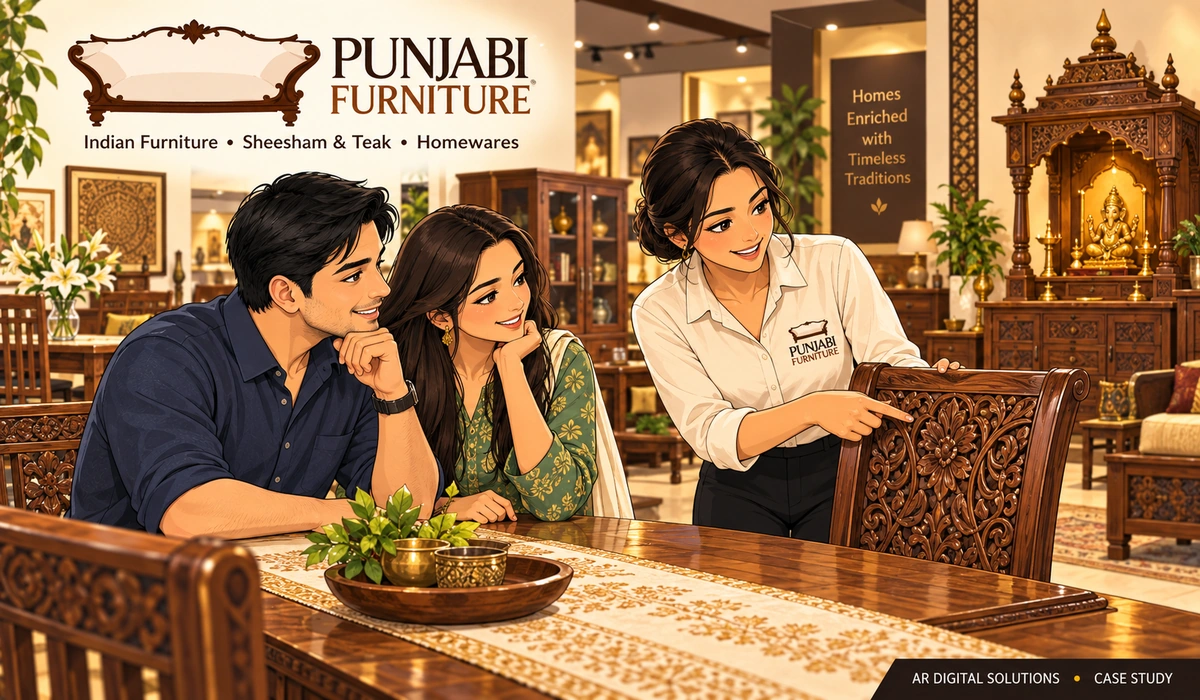
Punjabi Furniture sells Indian and Punjabi furniture and homewares online and from its Brisbane store, with shoppers coming from across Queensland and interstate.
The challenge
Specialty retailers often have a product range people actively want, but a website that doesn’t say enough for Google to match it with those searches. A shopper typing “indian furniture store near us” or “wooden mandir for home” needs to land on a page that clearly answers that need.
Furniture is also a crowded category. Big-box stores dominate broad terms, so a specialist store has to win on the searches where its range is the best answer. That takes a lot of well-written pages, and producing them at a steady quality is where many content plans stall.
What our team did
A full content plan
We mapped out 59 pages across the whole site. The plan covered rewrites of existing pages, category hubs, collection landing pages, cultural landing pages, location pages and blog articles.
Writing with cultural precision
The copy names timber species directly (sheesham, teak, mango) and uses cultural product names the way customers actually say them. Everything was written in Australian English. Standard pages ran 900 to 1,100 words and blog articles 1,200 to 1,800, each with SEO metadata, schema markup, FAQ schema, an internal linking plan and image requirements.
Location pages that feel local
Location pages list 12 or more suburbs each. Regional Queensland pages use drive-time framing, so a shopper in a regional town knows roughly how far the store is.
A staged rollout
All 59 pages were delivered in one branded master document with a publishing calendar. Publishing began in May 2026 with page rewrites, followed by priority location pages in June, collection and regional pages in July, cultural landing pages in August and blog articles in September.
Results
- 53 of 98 tracked keywords on page one, 59 in the top 30, and 35 in the top three
- #1 for “indian furniture brisbane” (about 140 searches a month)
- #1 for “indian furniture store” (about 140 searches a month)
- #1 for “wooden mandir for home” (about 210 searches a month)
- #1 for “punjabi furniture underwood” (about 110 searches a month)
- #2 for “Indian Furniture Sydney” (about 140 searches a month) and #2 for “indian furniture perth” (about 70 a month)
- #1 for location searches such as “Indian Furniture Toowoomba”, “Indian Furniture Ipswich” and “indian furniture gold coast”
The spread is what we like here. The store now shows up for product searches, cultural items and a long list of locations, not only for its own name.
Source: SE Ranking rank tracking, Google Australia, as of 17 September 2026. Rankings change and past results aren’t a promise of future ones.
Fun fact
The first secure online purchase is widely credited to August 1994: a Sting CD (Ten Summoner’s Tales) sold through NetMarket.
Marketing tip (lesson learned)
Big content projects fail when they’re written in one rush and published in one dump. Break the work into small batches, then publish on a calendar you can actually keep. This week, list your next ten pages and give each one a publish date.
A note on results
Results vary from client to client. They depend on the package chosen and the marketing budget the client puts behind the project, so what you see here reflects that client's spend, not a fixed outcome. Talk to us about a budget that fits your goals.
Related services
Selling a specialty range online? Our team builds ecommerce websites and runs SEO services in Brisbane with content planned for the searches your customers make. If your store is south of the city, see how we work with businesses in Logan.