
The short answer
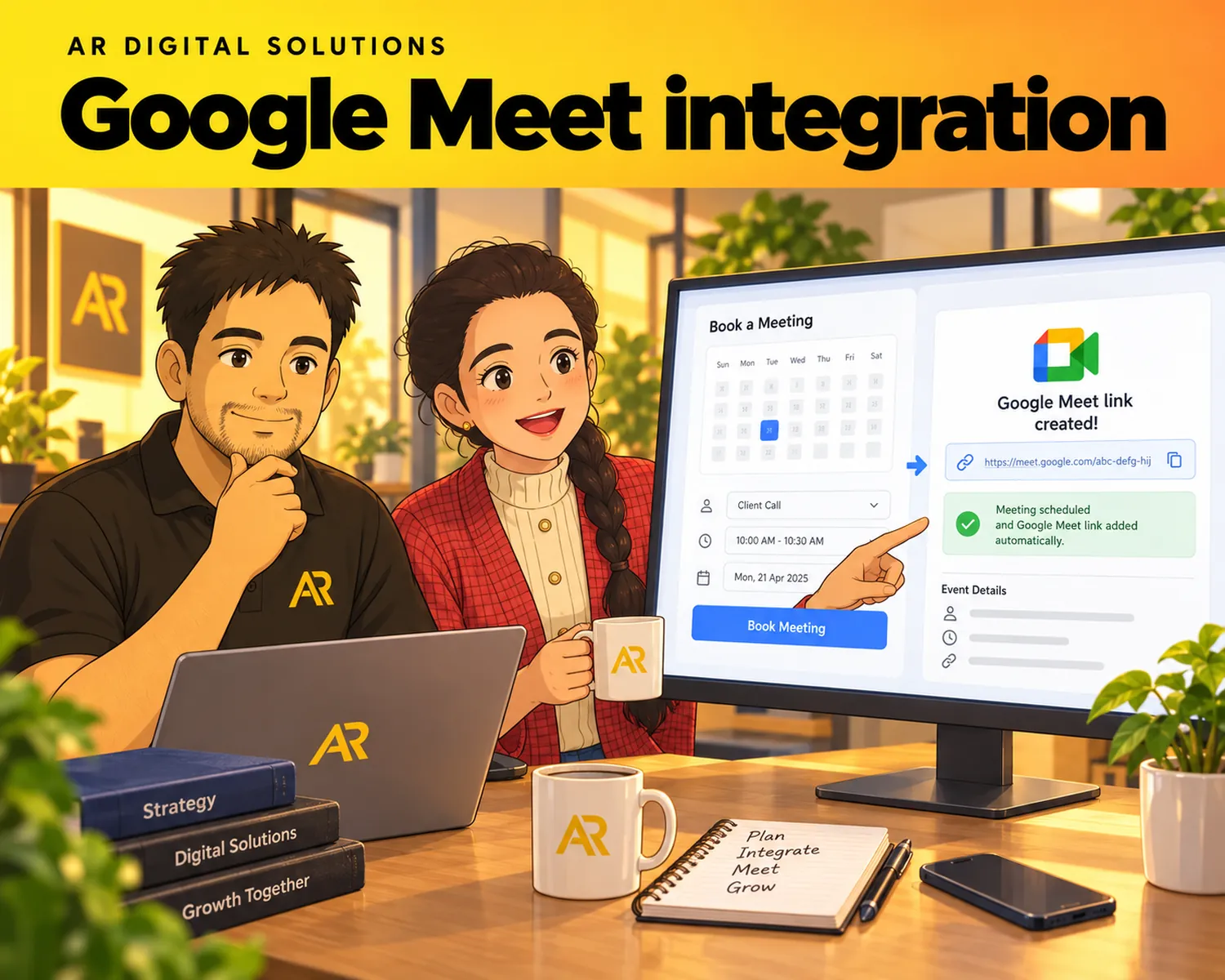
A Google Meet integration lets your own software create Meet links, read staff availability from Google Calendar and book appointments without anyone opening a calendar tab. It runs on the Google Calendar and Meet APIs. The hard part is keeping availability accurate when bookings, reschedules and manual entries all touch the same calendar.
What the work covers
- Meet links generated the moment an appointment is booked
- Live availability read from staff calendars, including events your system never created
- Buffer time, minimum notice and daily caps, per staff member or per service
- Two way sync, with reschedules and cancellations handled from either side
- Time zones stored in UTC, rendered in the viewer's local time
- OAuth consent inside your own Google Cloud project
Booking systems live or die on calendar accuracy
What sells a booking system is the form. What keeps people using it is whether the times on it are real. Show a slot that's already taken and you've created a phone call, an apology and a customer who checks before trusting the software again.
Read the calendar people actually use.
Most booking tools keep their own calendar and hold it in line with Google Calendar using a sync job. That works until someone accepts an invite or takes leave in Calendar without touching the booking tool. The records drift apart quietly and you find out when two people turn up for the same slot. Work availability out at request time instead, from a free busy query against the real calendar.
Buffers aren't decoration.
A back to back day looks efficient on Monday morning and is running twenty minutes late by ten. Buffer time either side covers the notes and the five minutes every call runs over. Set it per service, because a 15 minute intro call and a 90 minute onboarding don't need the same recovery. If someone can book you at 8:00am for 8:04am, someone will.
Store UTC, render local.
Timestamps go into the database in UTC and local time is worked out at render. That sounds like pedantry until daylight saving starts, half the country moves and Queensland doesn't. A Brisbane consultant booking a Melbourne client in October is the case that breaks systems storing local time as a string. Keep the zone name beside it, Australia/Brisbane rather than GMT+10.
Both sides get to change their mind.
Reschedules arrive from the customer, from the staff member, and sometimes from Google when a recurring event shifts. Each path updates the appointment record, the calendar event and the notifications. We subscribe to Calendar push notifications so a change lands in seconds rather than at the next poll, then reconcile on a schedule anyway, because webhooks get missed.
Someone will always book it manually.
A staff member will take a booking over the phone and write it into their own calendar. That isn't a training failure, it's how people work under pressure. Because availability comes from the real calendar, that entry blocks the slot on its own. Any design that needs staff to enter appointments in your software first will be wrong inside a week.
How we run the build
We map the booking rules
Who can be booked, for what, how long, and what happens on a public holiday. Most of the argument is here, not in the code.
We agree scope and price
Fixed scope, fixed number, dates in writing.
We build against your Workspace
Your Google Cloud project, with test calendars on staging so nobody's diary becomes a sandbox.
We watch it after launch
Expired tokens and missed webhooks alert us, not your customer.
Who this suits, and who it doesn't
It suits clinics, consultancies, education agents and brokers, or anyone running video appointments where a wrong slot costs money.
It's a poor fit if you need a booking link and nothing else. Google's own scheduling handles that, and we'll say so rather than quote a build you don't need.
Why clients hand us this work
Developers who also run the servers.
Whoever writes it keeps it running afterwards. AWS certified, in house.
Everything sits in your name.
Your Google Cloud project, your credentials, your data.
No lock in contracts*.
Projects are fixed scope. Support is month to month.
"We tried a no code connector and it kept breaking."
Usually it polls on a timer with nowhere to put a failure. No retry and no alert, so the first sign of trouble is a double booking.