
The short answer
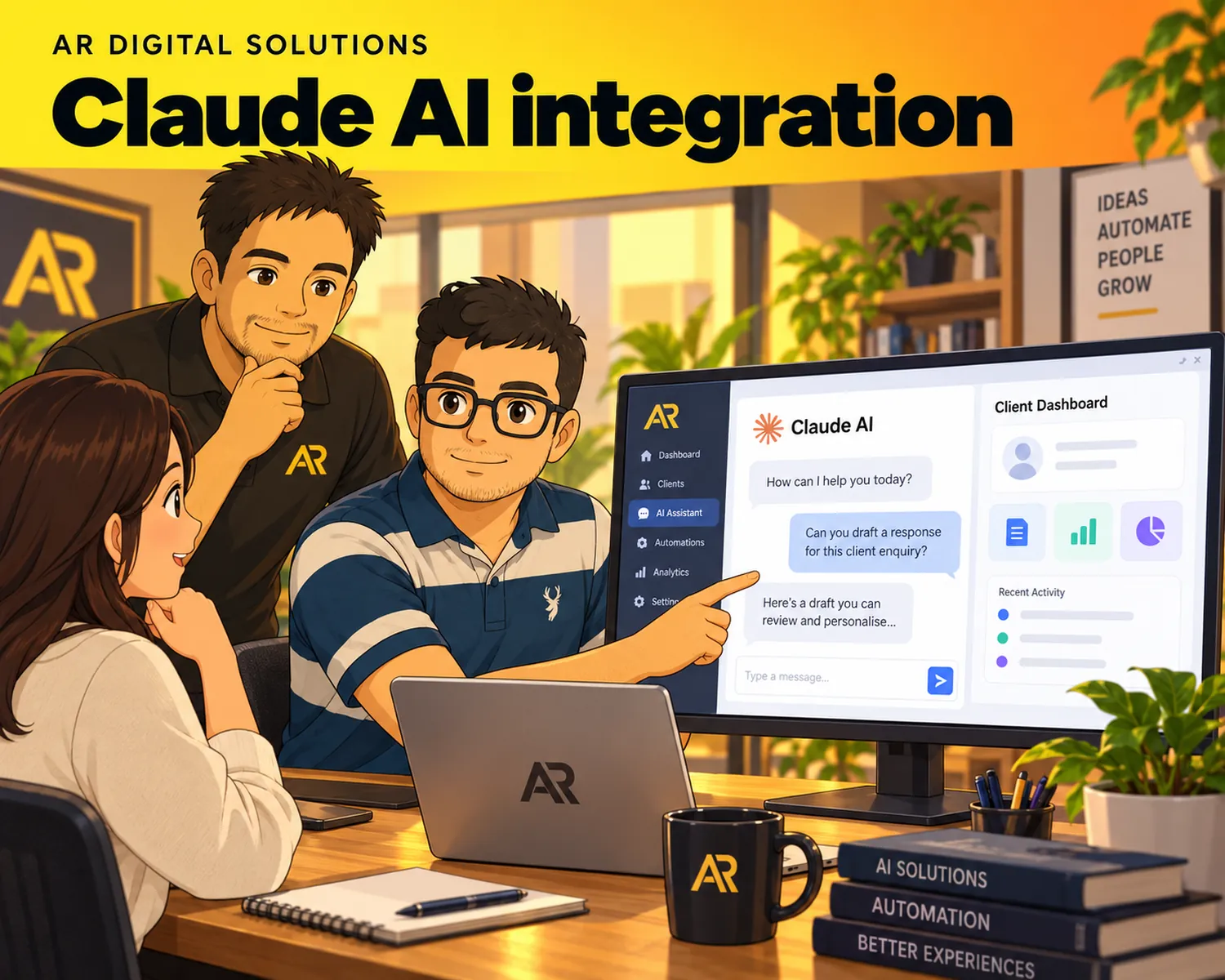
A Claude AI integration connects the Anthropic API to your software so it can read documents, draft work and take defined actions in your systems. It suits contract and policy heavy tasks, and anything where an agent needs a clear line between what it does alone and what a person approves.
What the work covers
- The feature built into your product, not bolted on as a chat window
- Document handling, a whole file per request or retrieval across a library
- Tool definitions, plus an approval step wherever an action is hard to undo
- Spend caps per user and per day, with alerting
- A scored test set, plus logging of prompts, tool calls and responses
What long context gives you, and what it doesn't
Long context windows are the feature most often quoted and most often misread. Putting a lot of text in front of a model is useful for some jobs and quietly wasteful for others. Know which you've got before anyone builds.
The whole document goes in at once.
Most document AI splits a file into chunks, stores them and retrieves the pieces that look relevant. That works when the answer lives in one paragraph. It works badly when the answer depends on the whole document: a clause on page 40 that changes the meaning of one on page 3, or a policy with exceptions scattered through it. Put the whole contract in one request and the model sees how the parts relate, rather than four fragments a search step surfaced.
Long context is not free, and not always better.
Every token in the window costs money and adds time, so a long prompt is slower and dearer than a short one. Send the same 80 page policy on every request and you pay for it every time. Across thousands of files, retrieval is usually still the right call, because you don't need all of it, you need the right part. Often it's both: retrieval narrows the field, then a long window takes whatever made the cut.
Tool use is where it stops being a chat box.
Give the model tools and it can look up an order, check availability, create a record or send something. That's when it earns its place, and when it becomes capable of damage. The question worth arguing about isn't what an agent can do. It's what it should do without a person saying yes first.
Draw the line by consequence, not capability.
Reading is safer than writing, and reversible is safer than permanent. Our default is that the agent reads whatever it's been granted, drafts whatever you want drafted, and stops before anything outside the business would notice or anything awkward to undo. Refunds, cancellations, client emails and changes to live records sit on the far side of that line.
Where the approval sits is a product decision.
Technically, all of it can be automated. Whether it should be depends on what your business can afford to get wrong and how often, and that judgement belongs to whoever owns the process, not the developer. An approval queue where a staff member clears twenty drafted replies in a minute beats automation nobody trusts. It also gives you evidence for the next decision, because you can see how often a person changed anything.
How we run the build
We pick the task and the measure
One job with a number attached. Time saved, queue cleared, errors caught.
We agree scope and price
Fixed scope, fixed number, with running cost estimated separately.
We build, then test on real cases
Prompts, tools and limits, scored on your examples before anything ships.
We review what the humans changed
The approval queue shows what to automate next and what to leave alone.
Who this suits, and who it doesn't
It suits contract and policy heavy work, claims and application review, and teams buried in files where the answer takes an hour to find and two minutes to act on.
It's a poor fit if nobody will own the output. An agent with no approver and no measure is a monthly cost with nothing behind it.
Why clients hand us this work
Developers who also run the servers.
Whoever writes it keeps it running and watches what it costs. AWS certified, in house.
Your account, your data.
The Anthropic account is yours, with the prompts and the logs.
No lock in contracts*.
Projects are fixed scope. Support is month to month.
"How do we know it won't do something stupid?"
It only calls the tools you've defined, inside the permissions you've set, and anything with consequences waits for a person. That's decided before the build.